
The Hortobágy ‘Csikós’ Saddle
Lószerszámok, szerszámok
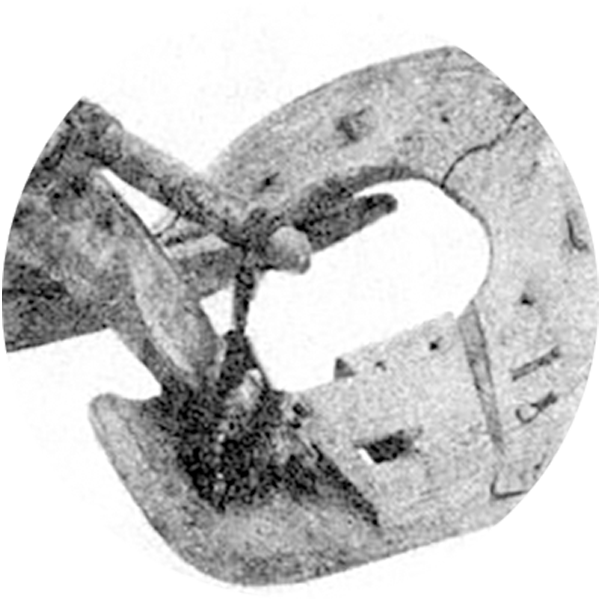
THE FÜRED SADDLE
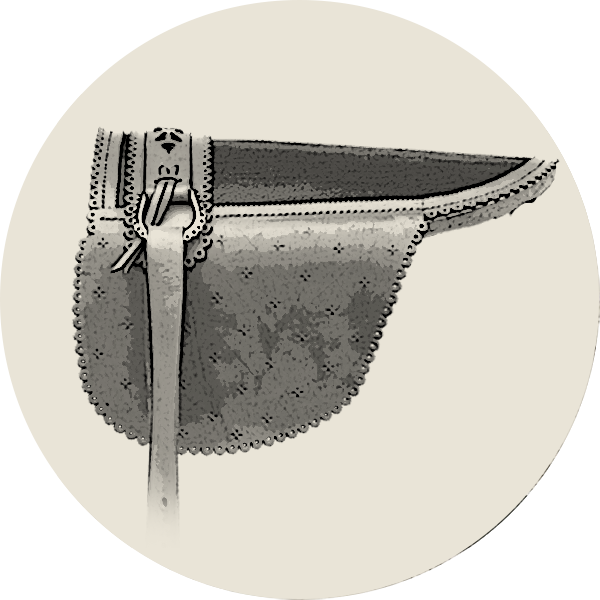
The Hortobágy ‘Csikós’ Saddle: ‘Priccs’ or ‘Patrac’
The saddle-making craft of Tiszafüred became well known both in Hungary and abroad thanks to the wars of the ruling dynasties of Europe. During the 18th century, light cavalry hussar regiments were established across Europe based on the Hungarian model, adopting Hungarian combat tactics, uniforms, weapons, and saddles. At that time, strict military regulations determined the equipment of hussars, requiring the use of the high-pommeled military saddle. The Füred saddle belonged to this type.
This saddle type primarily served the growing demands of the military, but it was also used by peasants, shepherds, and cart drivers transporting goods with horse-drawn carts. The saddle played a significant role during the War of Austrian Succession (1740–1760), when Maria Theresa increased the number of hussar regiments from three to eleven. It also became widespread in the hussar regiments of Frederick the Great of Prussia and, through Hungarian influence, even appeared among cavalry equipment during the American War of Independence. Later, it also became significant during the Hungarian Revolution and War of Independence of 1848–49.
As demand increased in Tiszafüred, saddle workshops operated by several generations of craftsmen opened one after another, eventually forming guilds by the early 19th century. Military industry regulations occasionally changed the official requirements for saddles. From 1832 onward, the shaping of the front pommel head was prohibited because it was considered dangerous. From 1868, hussar saddles underwent simplification and redesign. Hussars of the Austro-Hungarian Monarchy could only use saddles with cast-iron pommels.
As a result of these regulations, the number of Füred saddle makers declined to one-third during the second half of the 19th century. They no longer met military requirements and lost their army contracts. At the same time, changes in transportation reduced the need for saddles in general, leading to the decline of saddle-making in Tiszafüred.
The Füred saddle is a variation of the eastern-type Hungarian saddle. It was made from two kinds of wood. The saddle panels resting against the horse’s back were carved from softwood, while the curved pommels were made from hardwood. The softwood usually came from poplar trees in the floodplain forests of the region, while hardwood for the pommels was sourced from the Bükk Mountains. The wood had to be dried for 3–4 years before use to prevent warping.
The structure of the saddle is lightweight and relatively low-set. Both the front and rear pommels end in carved pommel heads, while the seat remains spacious and open. The saddle was laced together with leather straps and bridged with rear leather supports. The softwood parts were decorated with carved grooves and chip carving, while the pommel heads featured floral and vine motifs, either stylized or realistic. From the second half of the 19th century onward, carvings were often highlighted with red and black paint.

During the 19th century, county regulations prohibited shepherds from using framed saddles secured with girths. The aim was to prevent them from escaping quickly. The world of the outlaws and the shepherds often overlapped, with no clear boundary between them.
To understand this better, it is important to know that the mounted outlaw of the puszta was often an outcast poor man who, lacking stable work and shelter, periodically hired himself out as a shepherd. Later, whether by necessity or by choice, he could become an outlaw. Shepherds themselves, living on the margins of society according to their own rules, often crossed legal boundaries and sometimes cooperated with outlaws, either as receivers of stolen goods or as accomplices.
In response to these prohibitions, shepherds created their own ‘csikós’ saddle, also known as the ‘patrac’ or ‘priccs’. In real life this was not a true saddle but a piece of felt or cloth, sometimes covered with leather, without a wooden frame. It had no girth straps, only two stirrups.
In work alongside the horse herd, speed in saddling was essential, which explains the use of the ‘patrac’. It could quickly be placed on or removed from the horse’s back. One of its greatest advantages was safety: if the rider fell, the saddle fell together with him, preventing the rider’s foot from becoming trapped in the stirrup.
When standing guard over the herd, the csikós simply carried the saddle over his shoulder, and when lying down, used it as a pillow. Since the saddle was not fixed to the horse, mounting required a special technique. The rider pressed the saddle firmly against the horse’s side with his right hand while gripping the mane and bridle. Placing his left foot in the stirrup, he leapt onto the horse in a single motion. While riding, constant balance had to be maintained, with the rider controlling the saddle’s position by the pressure of his thighs.
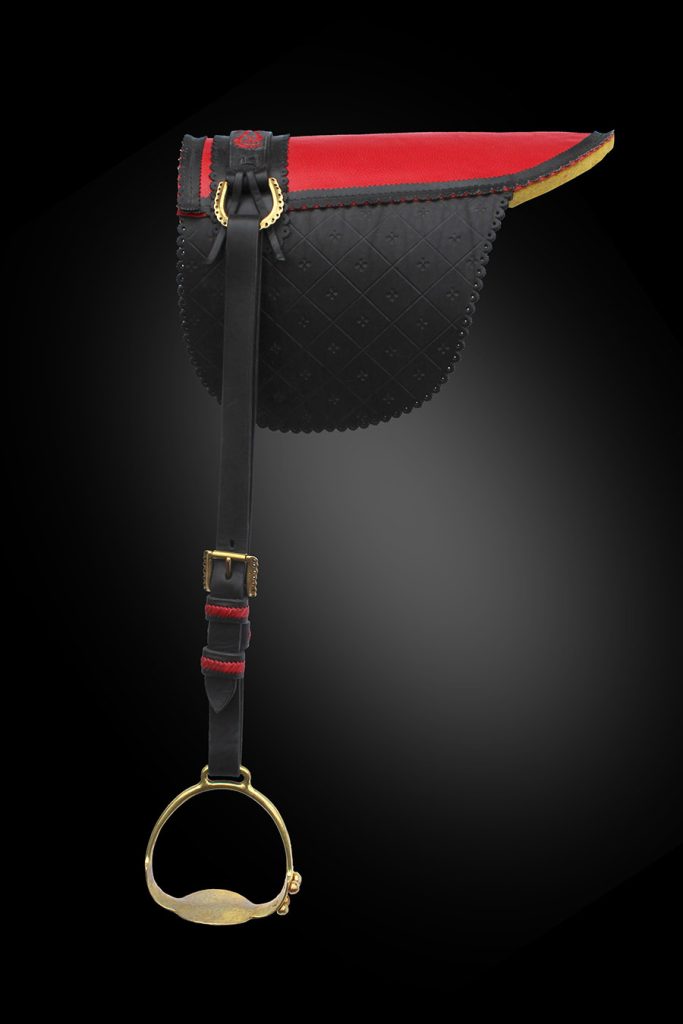
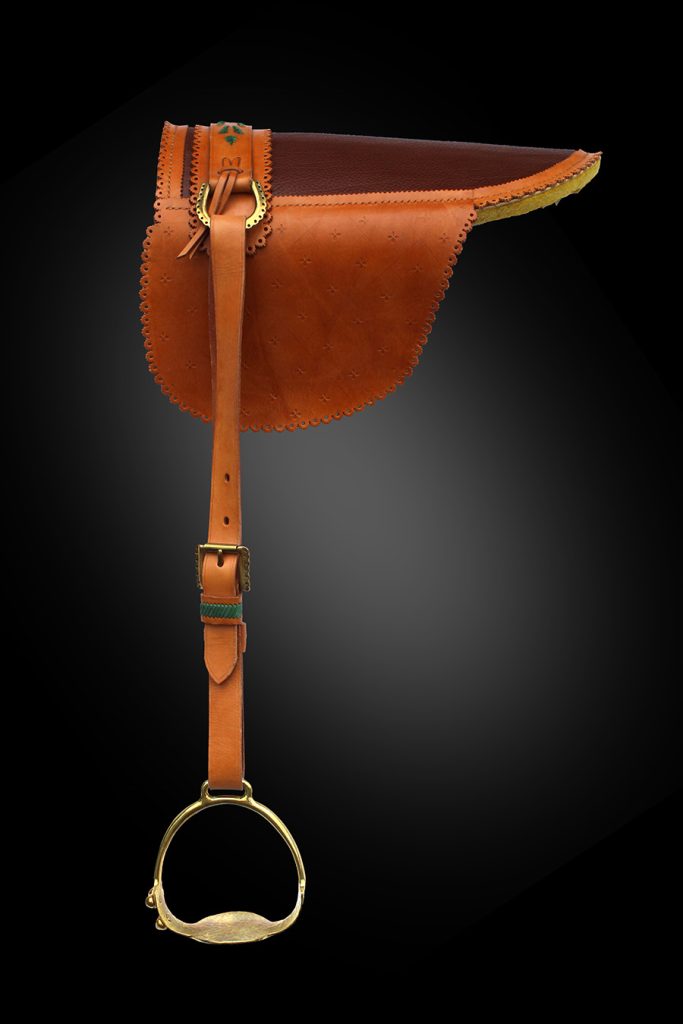
The ‘patrac’, better known as csikós saddle, is not truly a saddle but rather a piece of felt or cloth without a wooden frame, sometimes covered with leather. It has no girth strap, only two stirrups. It dates to the period when county authorities strongly prohibited shepherds from using traditional saddles.
The csikós saddle is simply placed on the back of the horse, and the rider mounts by firmly pressing it against the horse’s withers with the left arm. Its advantage is that if the rider falls and a foot becomes trapped in the stirrup, the saddle falls off together with the rider.
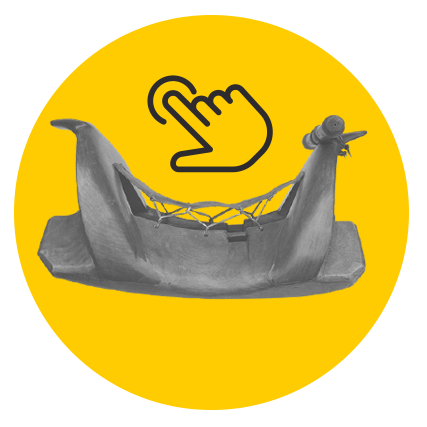
The saddle made in Tiszafüred, and later the so-called Tiszafüred-type saddle that evolved from it, is characterized by its relatively low position and by both the front and rear pommel heads ending in so-called pommel spoons, often richly decorated with fine carvings.
Alongside the large-pommeled saddles preserved in the Transylvanian mountains, the Füred saddle is the only truly tradition-preserving link between the era of the Hungarian Conquest and modern everyday life. It was also the last large-pommeled multi-purpose Hungarian saddle produced on an industrial scale.
The Füred saddle was made from two kinds of wood. The saddle base fitting the horse’s back was carved from softwood, usually poplar, while the curved pommels were carved from hardwood forked branches in a Y-shape. Both the softwood and hardwood were dried for three to four years to prevent warping.
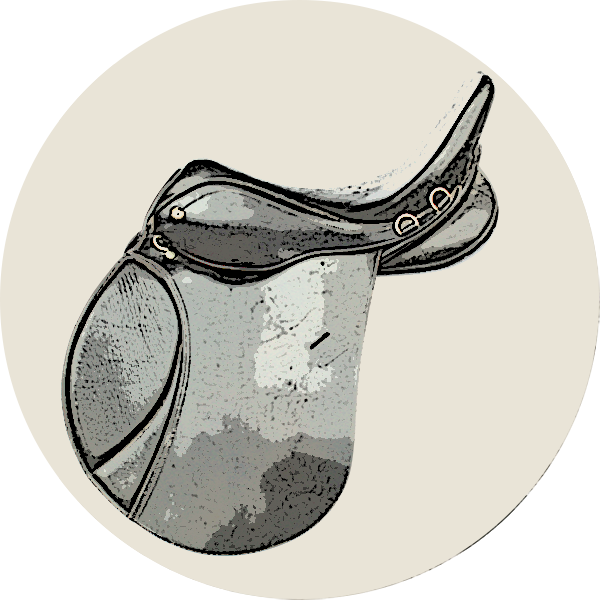
The universal saddle, also known as a multi-purpose saddle, has a moderately deep seat, slightly forward-sloping saddle flaps, and short stirrup leathers. It is suitable for several riding disciplines and is most used by recreational riders, as it can be used for basic dressage, trail riding, and even jumping smaller obstacles.
The jumping saddle has a flat seat, forward-cut saddle flaps, and usually short stirrup leathers. The flat seat and forward-cut flaps help support the rider’s position over obstacles and between jumps during show jumping.
The dressage saddle is used by riders in the discipline of dressage. It has a deep seat, steeply cut saddle flaps, and usually long stirrup leathers. Every aspect of this design serves functionality, supporting the rider’s position during dressage riding.
