
Shepherd
The Life of the Sepherd
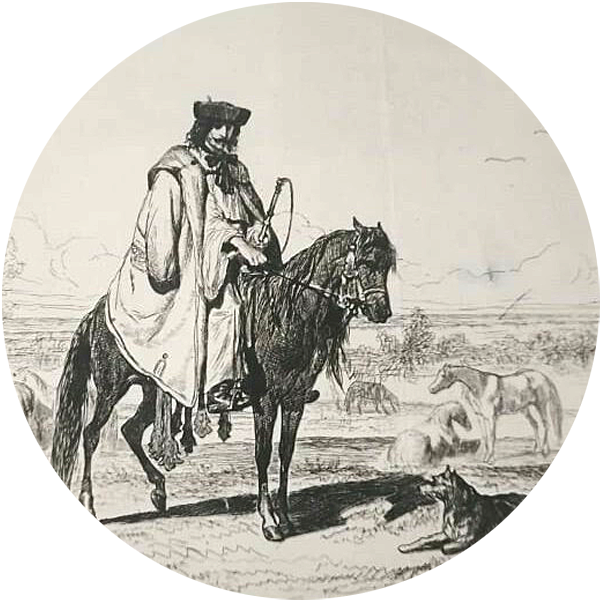
Shepherd Dynasties
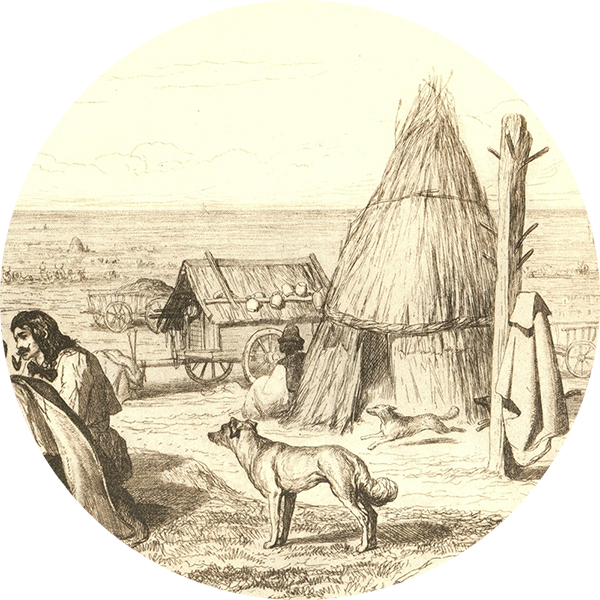
The lords of the puszta

According to traditional shepherd beliefs, a true shepherd was someone born into shepherd life; all others were merely “forced” shepherds. A shepherd had to be raised within the craft from childhood. Most of these men never even held a hoe or a scythe in their hands, as agricultural work was far from their way of life.
The shepherd lifestyle was passed on from father to son, this led to the formation of famous shepherd dynasties. In the Hortobágy pustas, families such as Máró, Kordás, Tóth, Sáfián, Nagy, Szabó and Bordás well known. Solidarity among shepherds was especially strong: they mostly married within their own community and rarely accepted outsiders or peasants among them.
The sons of Hortobágy shepherds in general worked as ‘bojtár’ apprentices with their fathers from the age of 6–8, learning the craft from their fathers. Later, they were usually sent to another shepherd to continue their training. Shepherds and livestock owners trusted boys from shepherd families more than strangers from outside the community.
It was common, too, that the son of a ‘csikós’ became a ‘csikós’, and the son of a ‘gulyás’ became a ‘gulyás’, meaning that both knowledge and position within the shepherd hierarchy were inherited. Today this has partly changed: shepherds now work with several kinds of animals, yet each still has the species they understand best and feel most connected to.
Shepherds formed a distinct world of their own. They looked down on farming and the accumulation of wealth, while settled farmers often viewed them with distrust. As the old saying went: “One must be born for the shepherd’s life.”
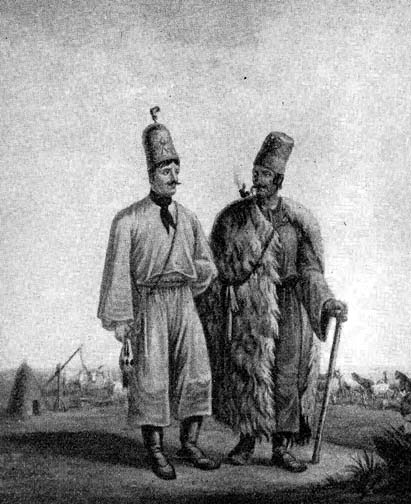
In the Nagykunság region and around Hortobágy pustas, the ‘csikós számadó’ stood at the top of the shepherd hierarchy, followed by the ‘gulyás’, then the shepherds of sheep and swineherds. At the very bottom stood those cattle herders and pig herders, who drove animals daily to the inner pastures.
Shepherd communities operated according to a strict order. At the head of the herd or stud was the ‘számadó’, who could also own livestock himself. He was responsible not only for the animals, but also for the work and care of the ‘bojtár’ apprentices. He was allowed to pasture a certain number of his own animals within the entrusted herd, and if damage occurred, he had to compensate the owners from his own livestock.
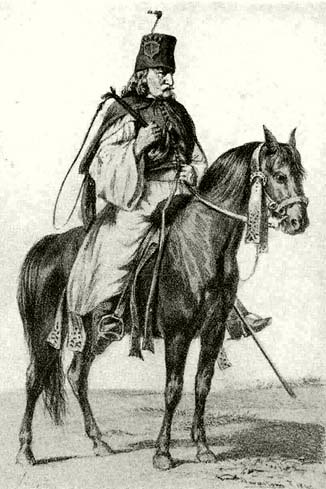
In the Hortobágy pustas that belonged to Debrecen one ‘csikósbojtár’ could supervise a maximum of 200 horses, while a ‘gulyásbojtár’ could tend up to 300 cattles. Shepherds ate together and carried out daily tasks collectively, including watering the animals, drawing water, and tending the livestock.
Every shepherd settlement also had a so called ‘talyigás’ man, whose duty was to look after the fire, cook at the open hearth, transport supplies to the pusta, and maintain the shepherd homestead. Life on the plains was characterized by strict discipline, precise division of labour, and strong communal solidarity.

Hortobágy shepherds rarely ate meat. If a sheep or calf died accidentally within the herd, it was consumed, but meat from animals that died of disease was never eaten. Their best-known dish was ‘gulyásos-hús’, rather than the modern form of goulash soup known today.
Since shepherds could not consume the meat of an entire sheep or calf at once, the meat was usually preserved. After a fresh slaughter, it was often shared with shepherds grazing on neighbouring pastures, and such favours were later repaid in kind.
Drying meat was one of the oldest methods of preservation. Hungarians already knew the process during the time of the Hungarian Conquest, when meat was salted, seasoned, cured in its own juices, and then dried. Hortobágy shepherds preserved this tradition for a long time. They ate the dried meat during the day or cooked it into soup.
In the pusta, hare, wild birds, fish from rivers and lapwing eggs also occasionally appeared on the table. Old shepherd huts commonly contained a fishing net called the ‘kétköz’. Mushrooms, however, were eaten only by a few, despite growing abundantly in the Hortobágy region.
The shepherds’ most important cooking vessels were the iron pot, the so called bogrács. Meals were eaten communally: the ‘számadó’ always served himself first from the bogrács, followed by the others. The fire was often fueled with “árvagané”, dried animal dung, which for a long time served as one of the most important fuels on the puszta.
